
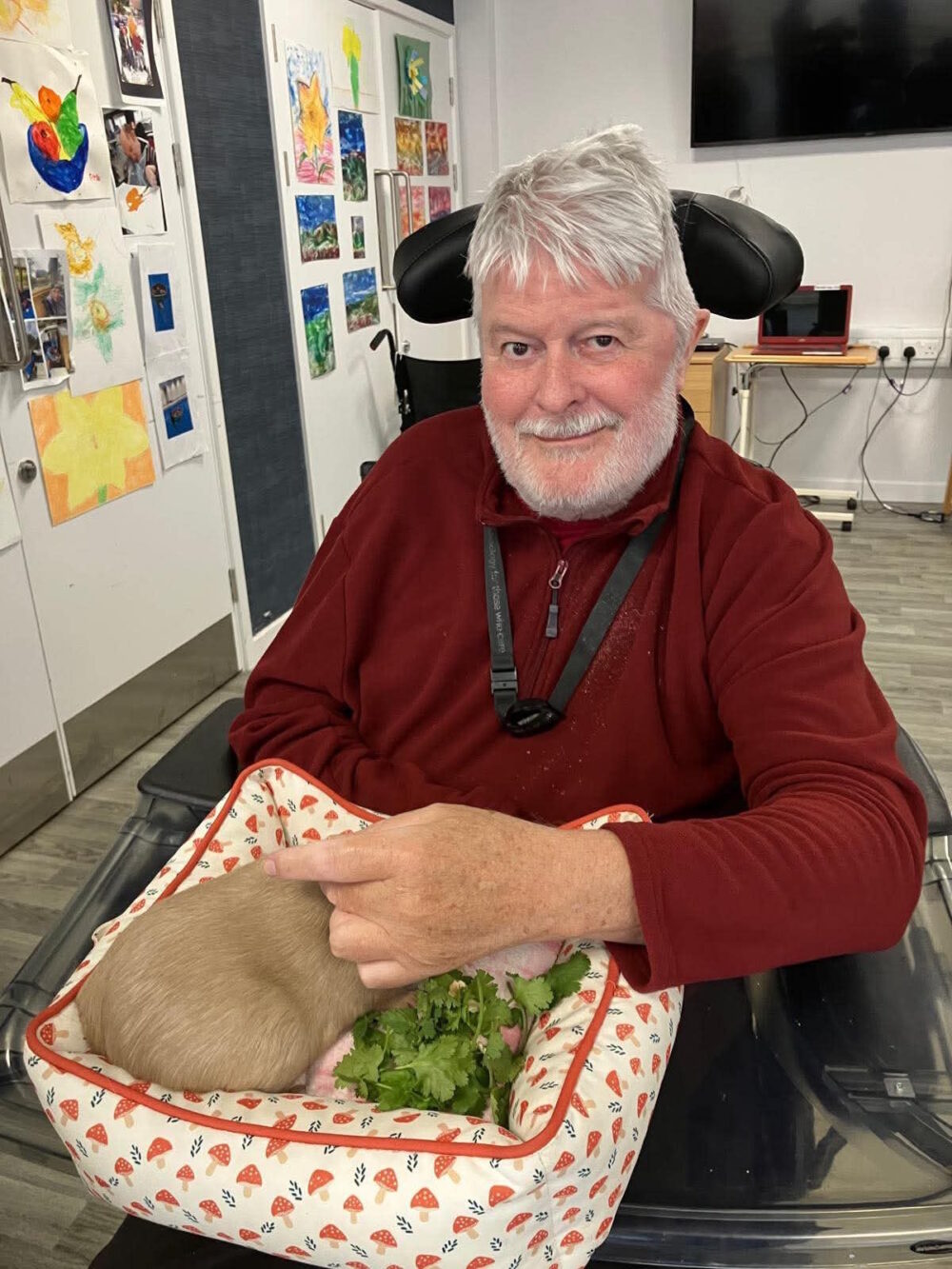
When someone you love needs care, funding decisions can feel overwhelming — especially when you are already coping with big changes. Getting the right support in place can make a huge difference, both financially and emotionally. In this anonymised recent case study, we share how Simply Continuing Healthcare acted as an advocate/representative for a family through the NHS Continuing Healthcare (CHC) process, leading to a successful Independent Review Panel (IRP) outcome and the reimbursement of care fees.

The Situation
Mr A is a husband and father in his late 60s. He had been very active and independent, cycling for miles each week with his cycling club and managing big events in his local community.
Sadly, in December 2023, Mr A experienced a life-changing stroke and was admitted to hospital. The following day, he had to be transferred for emergency surgery (hemi-craniectomy) to relieve the pressure on his brain. He was then admitted to a specialist neuro-rehabilitation facility. Here, he received therapies and physiotherapy, supported by multiple consultants and clinicians. He required full assistance with all aspects of his care and daily activities, alongside specialist rehabilitation and ongoing support. He also experienced severe and ongoing pain requiring numerous medications, yet he continued to experience breakthrough pain.
Like many families in this position, Mr A’s loved ones were doing their best to make informed decisions while adjusting to a new and uncertain reality. As Mr A’s needs became clearer over time (including mobility, cognition, communication and pain management), the family wanted kind, clear support for the Decision Support Tool (DST) meeting, due to be held at the specialist rehabilitation facility.
Key Milestones (Timeline)
Below is a simple overview of the key points along the journey (shown by month and year):
December 2023 – Mr A had a stroke and was admitted to hospital.
December 2023 (later) – Transfer for emergency surgery (hemi-craniectomy).
April 2024 – Transfer to a specialist neuro-rehabilitation setting.
June 2024 – Positive CHC Checklist completed.
June 2024 – DST completed; recommendation: not eligible for CHC.
July 2024 – Verification upheld: not eligible.
October 2024 – Intent to appeal recorded/local challenge initiated.
May 2025 – Local Resolution Meeting held.
July 2025 – Local decision upheld: not eligible; right to request an IRP explained.
October 2025 – Request for IRP submitted.
January 2026 – IRP held; the panel concluded Mr A did have a Primary Health Need and recommended eligibility for CHC.
It would be fair to say that Mr A’s family were reluctant to go to NHS England, and that the process up to this point had seemed futile. It seemed the ICB was adamant that they were not responsible for Mr A’s care. Our advocate strongly disagreed and persuaded the family to move forward to an IRP. Understandably, they were exhausted, and the ICB really did knock them down at every opportunity.
Despite the complexity of Mr A’s needs, the outcome of the initial assessment did not reflect the full picture.
The Challenge
Mr A had a positive CHC Checklist, which triggered a DST. This initial DST revealed a range of process issues, incorrect reasoning and concerns regarding the multidisciplinary panel. Ultimately, the ICB concluded that Mr A was not eligible for full CHC, and this was later upheld at verification.
Understandably, the family and advocate felt the assessment process — and the reasoning written down — did not fully capture the nature and complexity of Mr A’s needs.
CHC decisions can feel daunting — especially when assessments happen during active rehabilitation and the written rationale does not fully reflect what family members and carers are seeing in everyday practice.
How Simply Continuing Healthcare Helped
Throughout the process, Simply Continuing Healthcare acted as an advocate/representative for the family — helping to take the pressure off, explaining each step clearly, and keeping everything moving forward at a pace that felt manageable. Our support included:
- Explaining CHC eligibility in plain English and what evidence is usually needed
- Coordinating authority to request and review records
- Bringing evidence together to build a clear picture of need
- Talking the family through the challenge options after an unfavourable decision
- Supporting the local appeal process and making sure the family’s points were clearly set out
- Helping to escalate to NHS England and supporting the IRP request, including preparing submissions
At every stage, our focus was on keeping things evidence-based and fair, while ensuring decision-makers considered the totality of needs — not diagnosis alone. Just as importantly, we aimed to give the family reassurance and clarity at a time when everything felt uncertain.
Outcome
The Independent Review Panel agreed with Simply Continuing Healthcare that Mr A had a Primary Health Need and was therefore eligible for NHS CHC. This meant the family finally received an outcome that accurately reflected Mr A’s day-to-day needs. As a result, the ICB confirmed:
- Reimbursement arrangements for care fees covering July 2024 to April 2026
- Direct payment to the care home from April 2026 onwards
Key Takeaways for Families
- A “not eligible” decision does not have to be the final answer. There are formal steps you can take, including Local Resolution and Independent Review.
- The written reasoning really matters. If key details are missing, it may be appropriate to challenge whether the decision reflects the evidence.
- CHC is about the whole picture of need. Eligibility is based on the nature, intensity, complexity and unpredictability of needs — not diagnosis alone.
- Support can ease the stress and uncertainty. Having an advocate/representative can help you navigate evidence gathering, deadlines and submissions — and feel less alone in the process.
Final Thoughts
NHS CHC can be life-changing, but it is complex and often poorly explained. Awareness is the first step towards fairness.
If your loved one has complex, ongoing health needs, do not assume you must pay for care. NHS CHC exists to protect patients and families – but sometimes it must be pursued assertively.
Simply Continuing Healthcare provides free advice and guidance to help people navigate this complex process. Please do get in touch with us for free, tailored advice. Email Danielle directly: danielle.whitfield@simplycontinuinghealthcare.co.uk or call us on 01733 595456. Alternatively, please feel free to fill in our contact form with as much detail as possible: https://simplycontinuinghealthcare.co.uk/contact/ and one of our dedicated team will be in touch. We are not location-specific and support families across England and Wales.